Application technology:
the pro guide
verified Professional protection system

Application technology:
the pro guide

RubberPaint Universal is a highly elastic, waterproof protective barrier for the toughest jobs. Applied cold, with no heating, in any RAL colour.

01 / Applications

Use cases

Universal liquid rubber bonds without primer to most substrates and adapts to thermal movements of the structure.

roofing

Flat roofs

Refurbishment of old bitumen felt or complete new waterproofing — applied cold, with no gas torch and no open flame. The seamless membrane bridges cracks up to 1.5 mm and follows thermal movements from −20 °C to +80 °C. Ideal for carports, garages, extensions and commercial flat roofs made of bitumen, concrete, OSB or trapezoidal sheet.

foundation

Basement walls

Exterior and interior protection against ground moisture, seepage water and rising damp. Two coats form an elastic, crack-bridging barrier on concrete, masonry and old bitumen. Where groundwater is under pressure, we additionally recommend a primary thick bitumen coating in accordance with DIN 18533.

balcony

Balconies and terraces

Waterproof, walkable as a finished surface or usable under tiles or timber decking. Resistant to UV, frost and de-icing salt; withstands temperature swings from −20 °C to +50 °C in continuous use. Strong adhesion on concrete, screed, old tiles and wood — broadcast quartz sand makes the surface slip-resistant (R10/R11).

apartment

Facades and plinths

Breathable (sd < 0.3 m), waterproof protective layer with crack-bridging class A2 to EN 1062-7. Protects render, concrete, brick and plinths against driving rain, splash water and freeze-thaw cycles. Available in over 200 RAL shades — also as an individually tinted mixing base.

precision_manufacturing

Metal and sheet steel

Corrosion protection directly on flash rust — no sandblasting and no separate rust converter needed. Two coats form an elastic, salt-water-resistant barrier against oxygen and moisture. Suitable for steel beams, trapezoidal sheets, zinc roofs, railings, garden gates, gutters and tanks.

forest

Timber structures

Highly elastic coating that moves with the wood — no chipping, cracking or peeling as with classic stains and varnishes. Reliably protects fences, pergolas, garden sheds, carports and timber cladding against rain, UV radiation and weathering. Can be applied to greyed old timber after pre-treatment with a wood brightener.

deck

Concrete (exterior)

Protects exposed concrete and plinths against carbonation, chlorides and freeze-thaw spalling. Vapour-permeable with a high CO₂ barrier effect — water vapour escapes, aggressive gases are stopped. Ideal for retaining walls, garage exterior walls, concrete foundations and industrial exterior coatings.

pool

Pools & swimming baths

Chlorine-, salt-water- and UV-resistant coating for concrete pools, swimming ponds and water basins up to 5 m deep. Highly elastic, seamless membrane without joints — nothing for algae or limescale to cling to. Standard shades pool blue, turquoise and graphite; other RAL shades on request.

shower

Bathrooms & wet rooms

Waterproof, mould-resistant interior coating for bathrooms, showers, utility rooms and damp cellars. Vapour-permeable and washable to EN 13300 Class 1 — splash water and daily cleaning with household cleaners are no problem. Also suitable as a bonded waterproofing layer beneath tiles to ETAG 022.

02 / Application

Step-by-step guide

Step 01 / 05

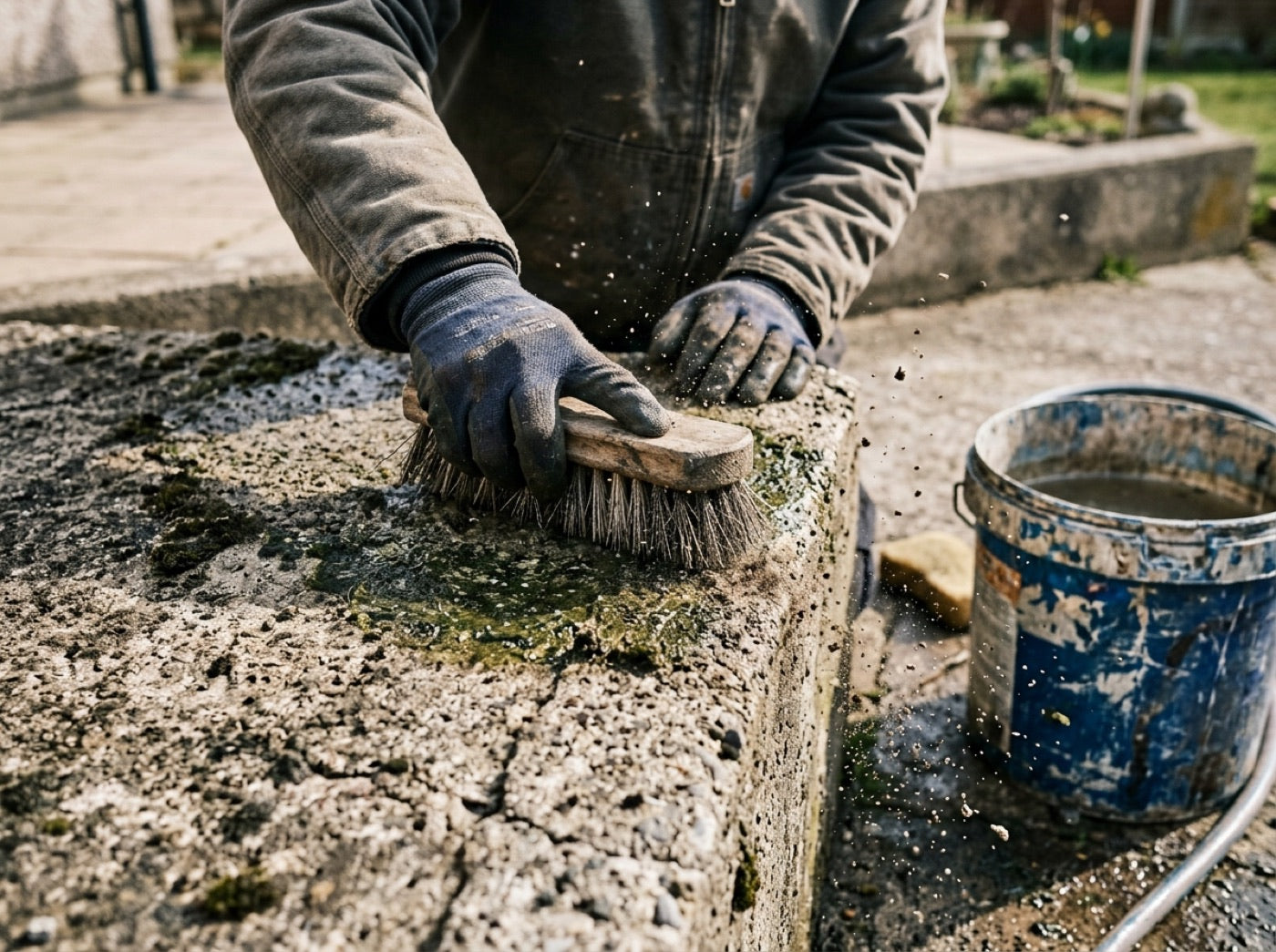
Prepare the substrate

The foundation of long life.

Clean the surface thoroughly to remove dust, grease, algae and loose particles — use a pressure washer (max. 120 bar) or wire brush where needed. On highly absorbent substrates, prime first with RubberPaint thinned with 5–10% water. Fill cracks wider than 3 mm with sealant or filler beforehand, and strip back any old, flaking coatings completely.
Prepare the substrate
Step 02 / 05

Seal the joints

The critical points under control.

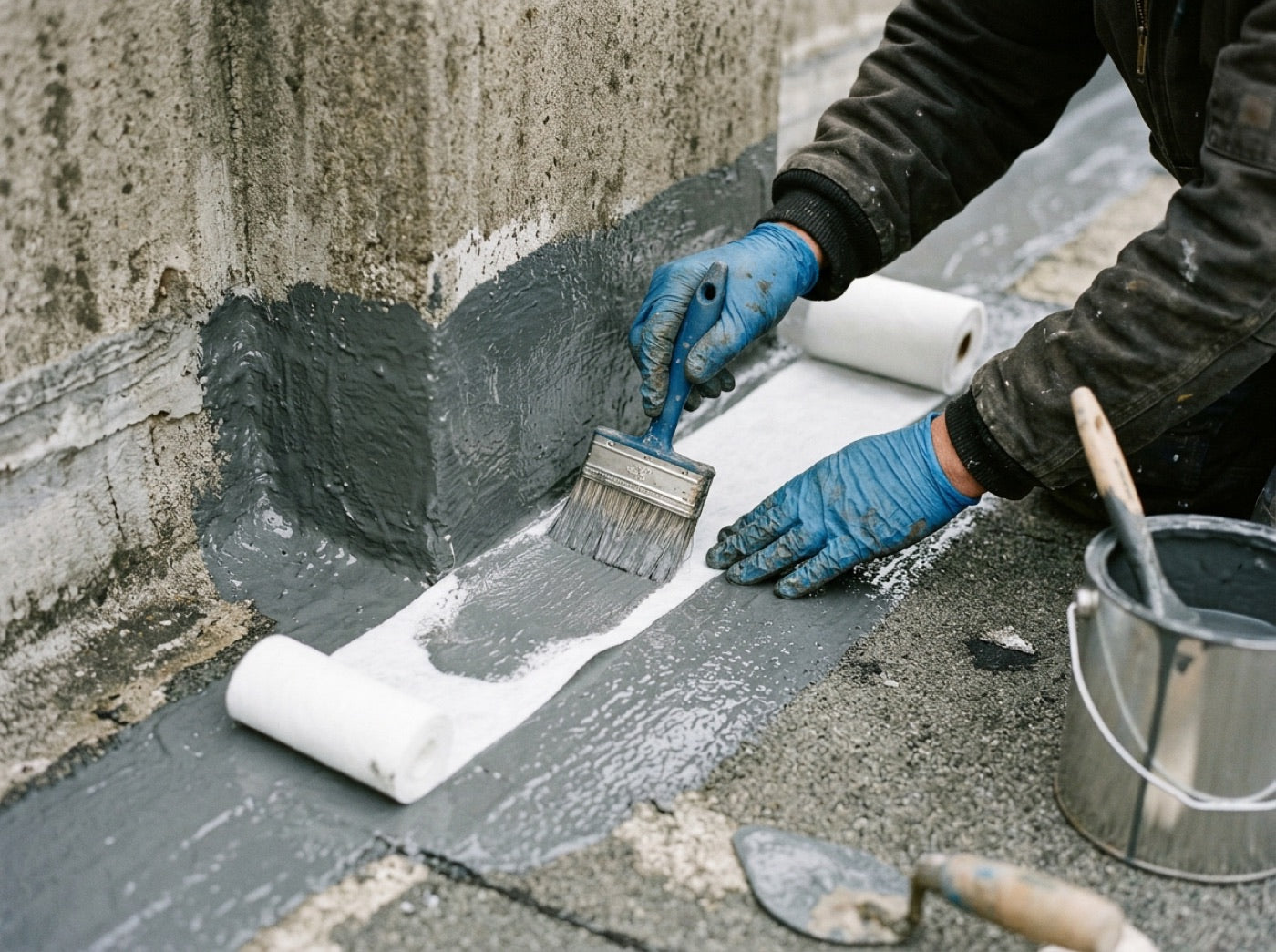
On roofs, balconies and terraces, embed reinforcement fleece (polyester fleece 60 g/m² or glass-fibre fleece) into the wet first coat at every transition, internal and external corner, roof penetration, chimney, drain and wall junction. Saturate the fleece fully and work out any bubbles — overlaps at least 5 cm. These watertight detail points account for 80% of the long-term service life.
Seal the joints
Step 03 / 05

First coat

Building the base barrier.

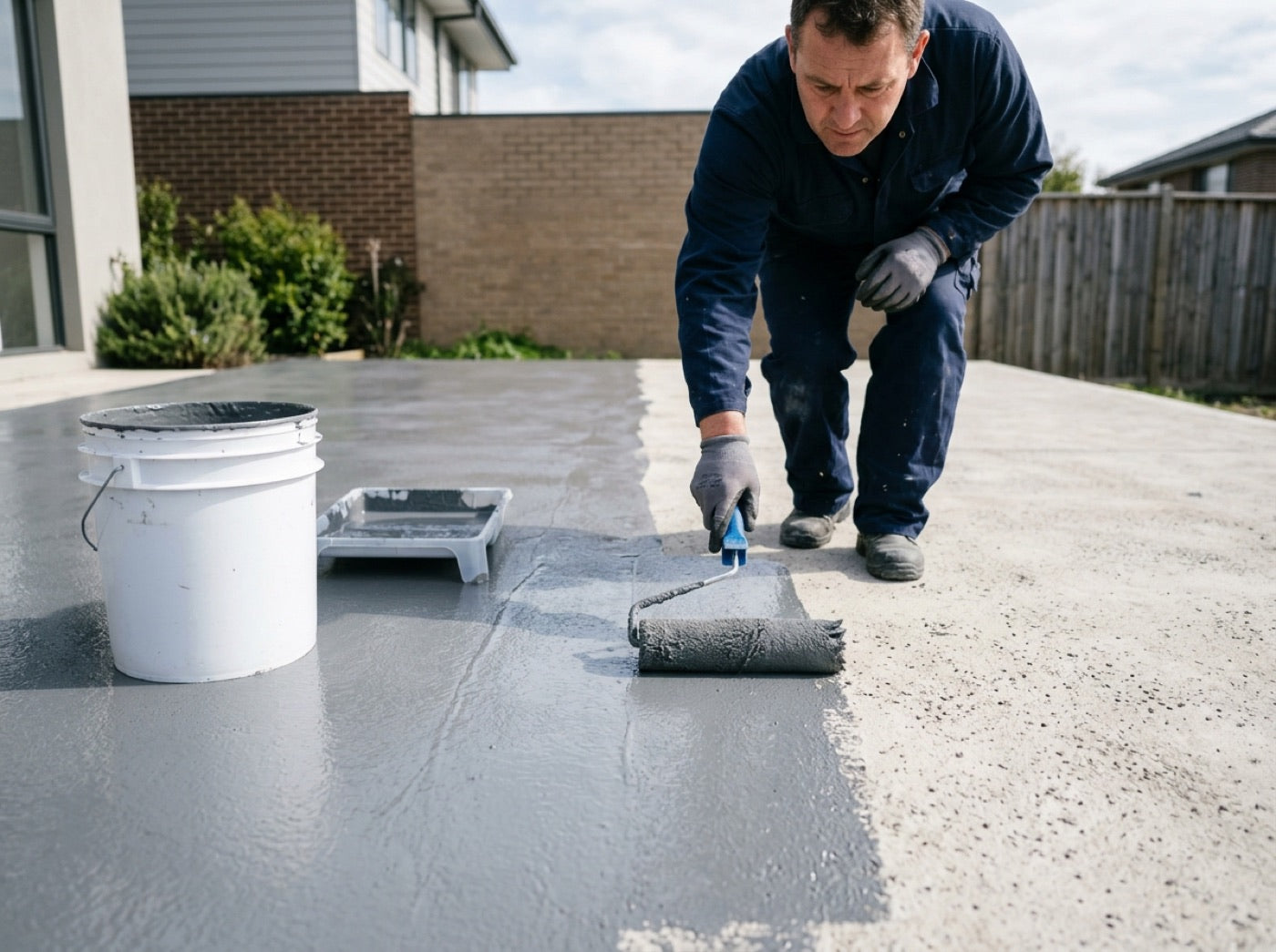
Apply with a brush, lambswool roller (12–18 mm pile) or airless sprayer (15–18 MPa, nozzle 0.017"–0.023"). Consumption approx. 100–200 g/m² per coat, depending on the porosity of the substrate. On absorbent surfaces the first coat can be diluted with up to 5 % water for better penetration. Apply between +10 °C and +30 °C; do not apply if rain is expected within the first 6 hours.
First coat
Step 04 / 05

Drying and curing

Patience for a perfect finish.

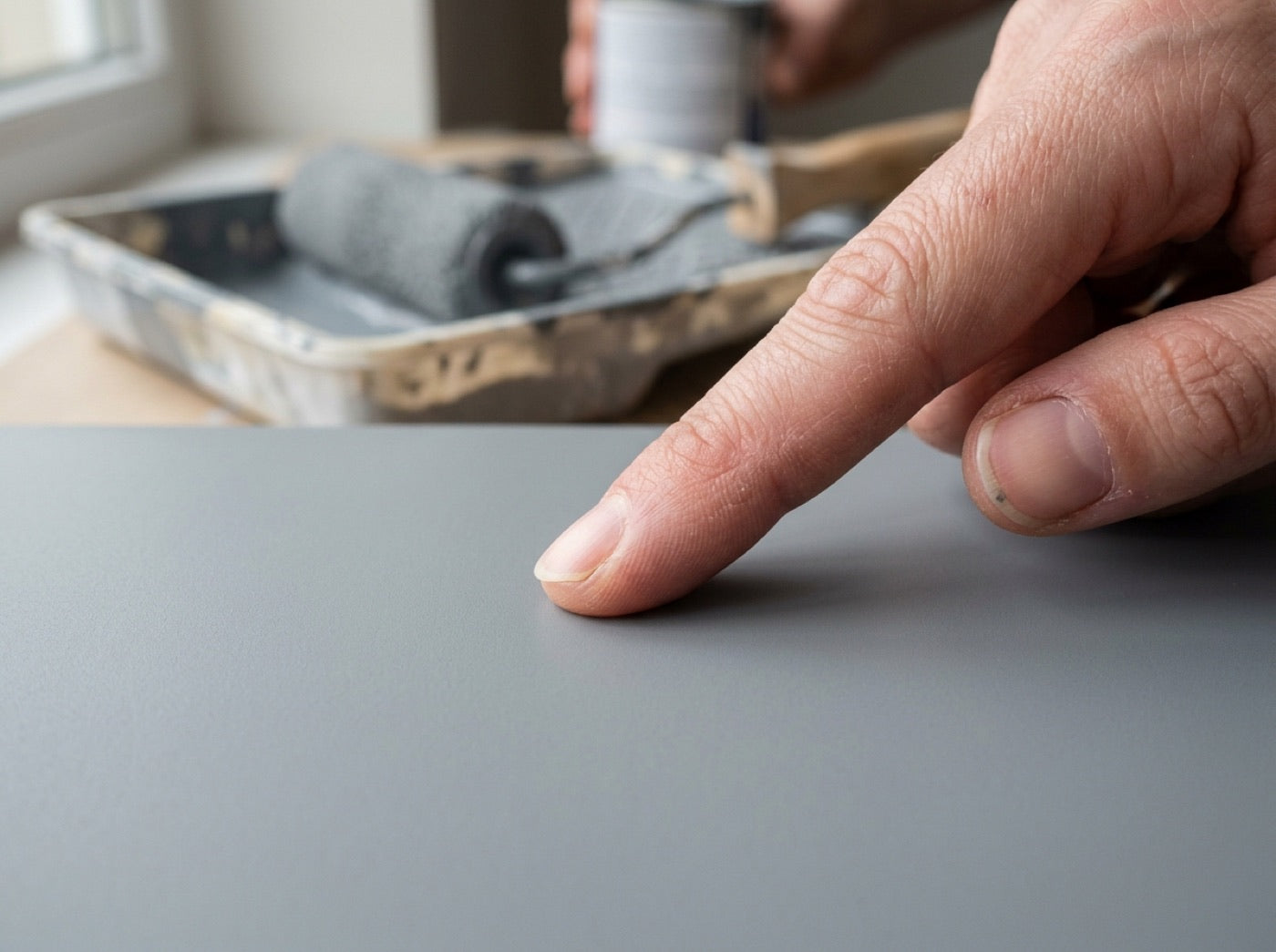
The first coat is dust-dry after approx. 2 hours at 23 °C and 50 % relative humidity — longer in cooler weather or higher humidity. Apply the next coat only once the previous one is completely dry (at least 4 hours), otherwise bubbles or clouding may occur. Stop work below +10 °C or above +30 °C — extreme conditions impair film formation.
Drying and curing
Step 05 / 05

Second coat

The final armour.

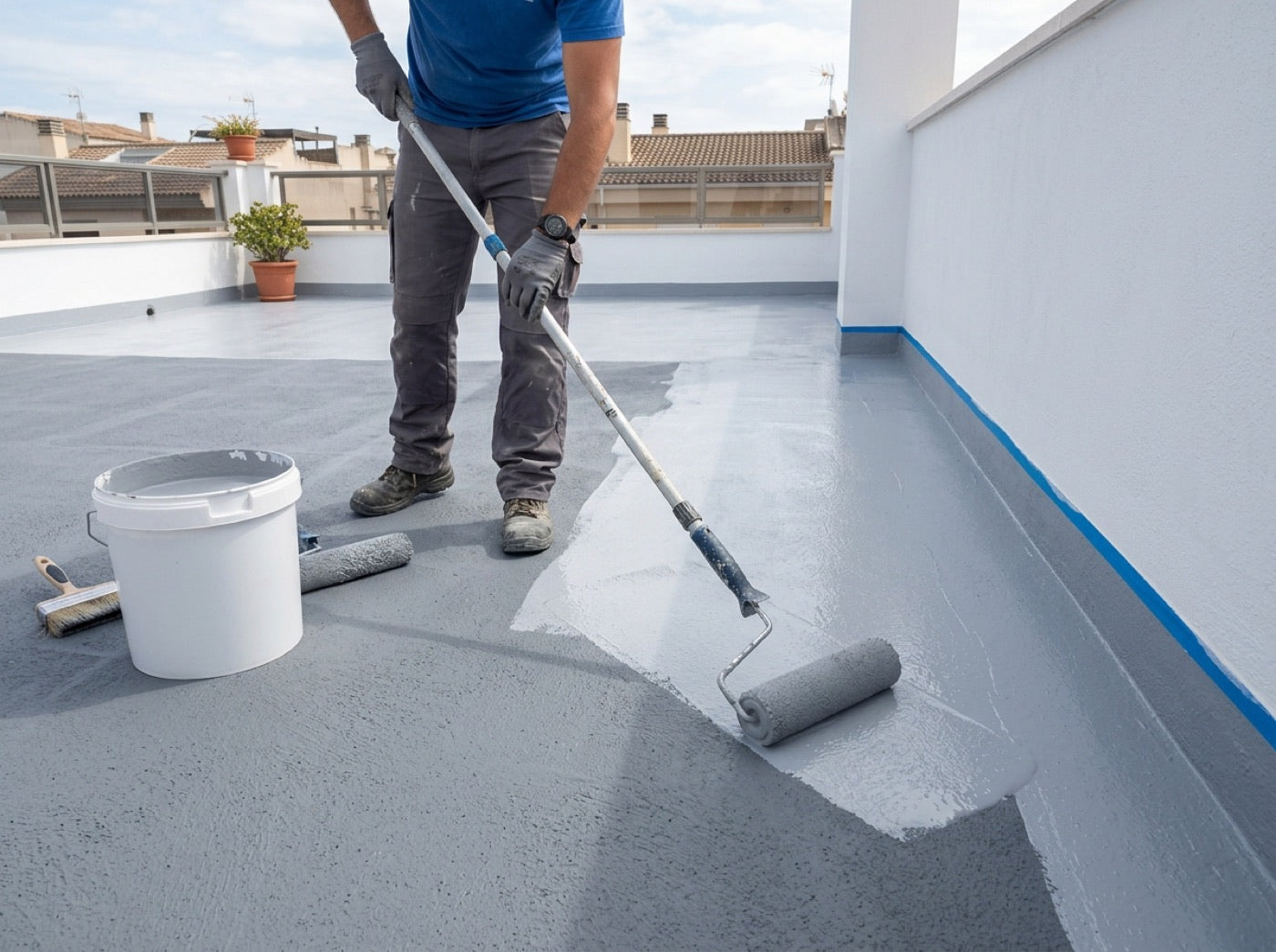
Apply the second coat undiluted and crosswise to the first — this reliably covers any weak spots and achieves the full dry film thickness of approx. 0.5–0.8 mm. Rain-resistant after 6 hours, carefully walkable after 24 hours, fully resistant to mechanical and chemical loads after 28 days of complete curing. For heavily stressed areas (maintenance walkways, chimney connections) we recommend a third coat.
Second coat
lightbulb
Pro tip

For heavily stressed details (chimneys, maintenance walkways, high-traffic areas) we recommend a third coat — it adds years to the service life.

03 / Specifications

Technical data

Consumption per coat 100–200 g/m² (0.1–0.2 kg/m²)
Recommended coats 2 (3 for heavily-stressed surfaces)
Drying time 2 h dust-dry · 4 h recoatable
Full cure 28 days
Application temperature +10 °C to +30 °C
Service temperature −20 °C to +50 °C
Binder Acrylic latex (solvent-free)
Tool cleaning Water, immediately after application
04 / Planning

How much material do I need?

Enter your area and desired number of coats — we recommend the optimum tub combination.

Standard: 2 coats. 3 for heavily exposed surfaces.

info

Consumption: 200 g/m² per coat. +10 % buffer for offcuts and uneven surfaces. For larger projects (> 80 m²) contact us for individual advice.

Recommendation

6,6 kg needed

Calculating…

Total quantity
Total price

Free shipping from €199 (approx. £175) — review your basket after adding.

Got a technical question?

Our technical team advises on complex applications, substrate analysis and film-thickness calculation.